
LIVE ONLINE WORKSHOP - JUNE 3RD - 5TH
ATTENTION: For the driven person with too many courses, too many dead side hustles, and one whose spouse can't stop asking how it's going… now the “Bigfoot Method” shows you...
How to BE THE
Zillow
of ANY NICHE
Zillow Doesn't Own A Single House. Yelp Doesn't Own A Restaurant. Angi Doesn't Own A Wrench.
And For The First Time In Twenty Years, A Regular Guy Can Own The Same Kind Of Asset They Do —and It LITERALLY builds itself In A Long Weekend Instead Of A Decade.
— — NAPKIN MATH EXPLAINED — —

Listen, I've been doing this thirty years and I had to write the numbers down on a napkin three times before they stuck.
Thirteen billion dollars. Zero doorknobs.
Here's the model, here's the moat that just vaporized, and here's what I'm doing about it before the institutional money finishes the rollup.
— — THE FULL STORY — —
You ever notice Zillow doesn't own a single house?
Think about that for a second chief.
Not a friggen’ one. Zero houses. The whole company - thirteen billion dollars - and they don't own a doorknob. They built a list of houses. That's it. That's the whole business.
Yelp? Same deal. They don't own a restaurant. They own the list of over 2M! Each with a page taking up space in Google!
Angi doesn't own a wrench. They own the list of guys who own the wrenches. One-point-one-nine billion in revenue. Ninety-five percent gross margins. They're servicing a six hundred and fifty billion dollar home services market and they don't own a ladder.
The craziest part is… these sites BUILD THEMSELVES.
More on that in a minute…
Look, I've been doing this thirty years and this one just hit me different.
Here's why I'm bringing it up 🎯
You know how every six months somebody calls me up and goes "Perry, what's the next thing?" I usually tell them there's no next thing. Most of the time there isn't. Most of the time it's just the old thing dressed up in new clothes — somebody trying to sell you a course about TikTok that's really just the same affiliate marketing course they sold you in 2017.
This one's different. I call it the “Bigfoot Method” because with “robots” it’s easy to create really useful, A.I. pages that Google loves and A.I. (AEO) eats up like a fat kid at a BBQ.
I'll tell you why in a minute. First I want you to picture something with me.
The kitchen table at 11 o'clock on a Sunday night ⏰
You know the scene I'm talking about.
Laptop open. Forty tabs. One of them's a course you bought in 2023 you never finished. One's that Shopify store that lasted six weeks before the supplier ghosted you. There's a fishing blog in there somewhere. There's an affiliate site you set up and forgot about.
Your wife stopped asking how it was going eighteen months ago. Not in a mean way. The way a mom stops asking the kid how soccer practice went after the eighth practice they got pulled at halftime.
You haven't told her what you've spent.
And the thing that's killing you isn't the money. The money's gone, you can make more money.
The thing that's killing you is that you know, the way you only know things at 11 o'clock on a Sunday, that the next $97 course isn't gonna fix it... and that you don't have a better answer.
So here's the part I want you to hear.
It's not that you're not smart enough. It's not that you didn't work hard enough. Somebody's been selling you tools for four years when what you actually want is an asset.
You want the thing that pays you whether you show up or not. Whether your back hurts. Whether your kid's in the hospital. Whether you take all of next month off.
You want an asset.
And until last year, you literally could not have one. Not in this category.
— — WHY NOW? — —
So wHAT cHANGED?
Building a directory used to be a rich man's game. Period.
Zillow raised thirty-two million bucks before they had a working site. Yelp took eight years to turn a profit. Angi took fifteen.
You wanna know why? Because filling a directory with thousands of useful, organized pages meant hiring an army of writers and developers and paying them for years while you prayed the traffic showed up before the runway ran out.
That was the moat. That's the only reason guys like you and me weren't in this business twenty years ago.
AI just vaporized that moat.
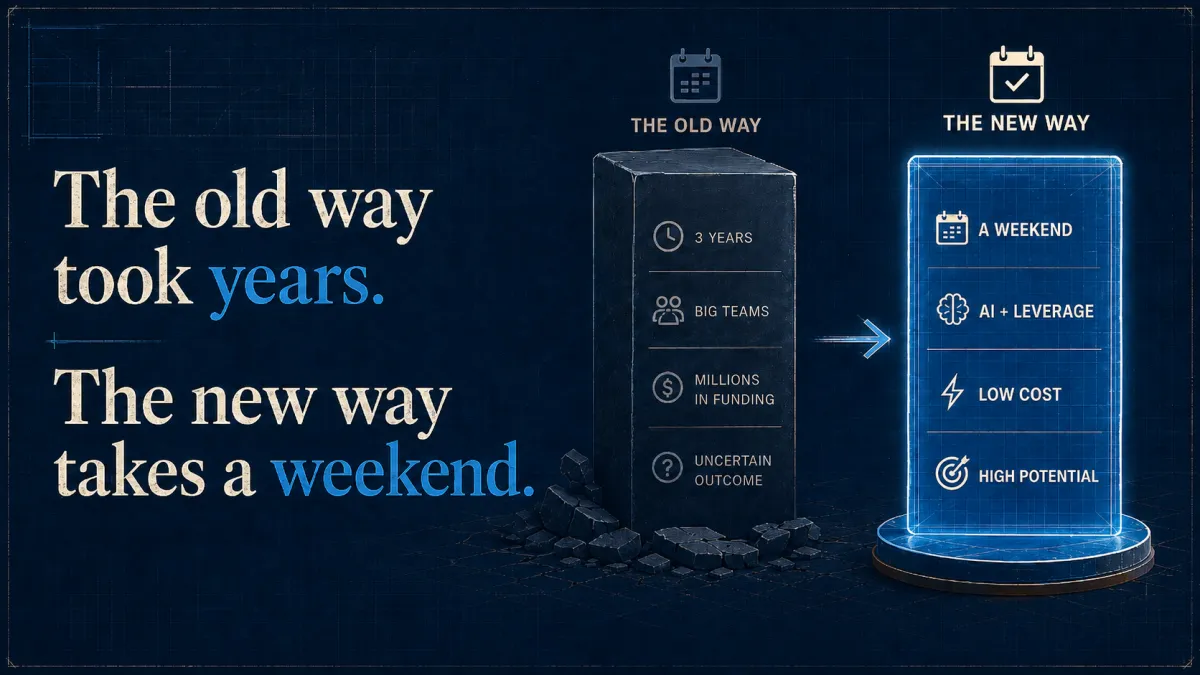
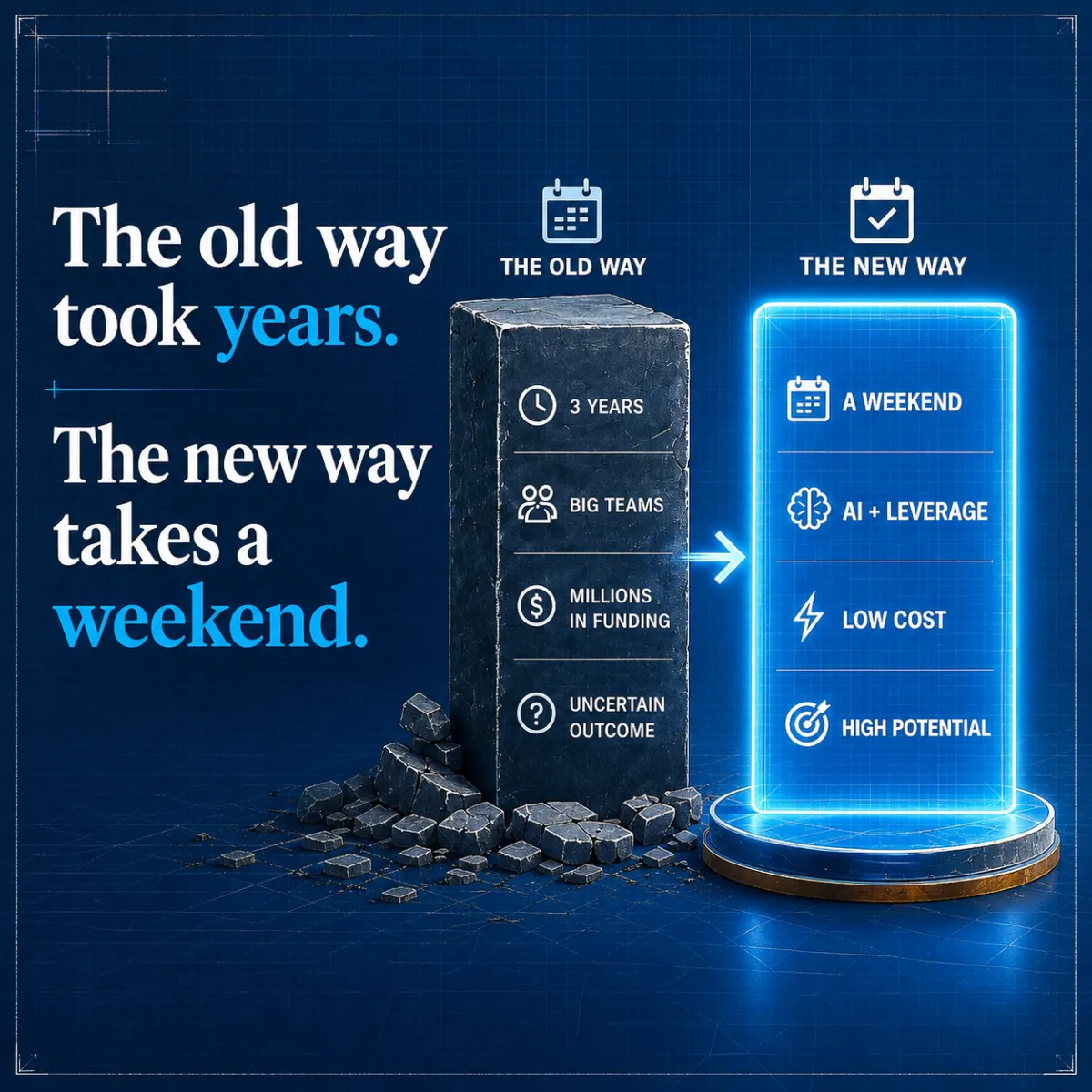
What used to take three years and a million bucks now takes a long weekend. Thousands of pages. Cross-linked. Indexed. The exact kind of structured, organized content that Google and ChatGPT and Perplexity are literally starving for right now.
A weekend. For the same asset class that minted Zillow.
I keep saying it out loud because I don't think it's sunk in for most people yet.
The thing nobody understands about directories 💡
So here's where most people get confused.
When you build a directory, you're not selling to the users. You're selling to the vendors.
That's the whole mechanism. The users want it free, always — that's the iron law of the internet, users don't pay for things, never have, never will. But the businesses listed in the directory? The therapists, the contractors, the dentists, the wedding photographers, the software companies?
They need customers. They will pay you forever to keep showing up in front of customers.
You ever heard of Psychology Today?
Couple of guys built a directory of therapists. That's the whole company. Two hundred and twenty-five thousand therapists pay them about thirty bucks a month to be findable on the site. Do the math.
Eighty-one million dollars a year. Just from listing fees. Twenty million people visit the site every month and most of them have no idea they're using a directory — they think they're using a referral service.
Same play with Angi. Homeowners don't pay Angi anything. The hundred and eighteen thousand contractors pay Angi.
This is the structural genius your blog never had, brother. Your blog had to charm a stranger into pulling out a credit card. A directory charges vendors who need customer flow to survive.
You're not building a business that has to chase consumers.
You're building a tollbooth that vendors pay to cross because there's no other bridge.
That's the part that hit me.
Real people doing this right now 👥
These aren't gurus. None of them are on a podcast circuit. Most you've never heard of.
Tim Stoddart runs SoberNation. Directory of rehab facilities. Been at it about ten years. Pays him roughly $250,000 a year — and that's profit, not revenue. Spends almost no time on it.
Stan Bright runs SaaSHub. One guy. 1.3 million monthly visitors, almost all from search. 108 businesses pay him $99 a month for featured listings. Ten grand a month in recurring revenue before he even turns on display ads.
Cory Barnes lives in Chattanooga. Built a directory using off-the-shelf software and a Facebook group as his traffic source. Ten grand his first three months. Over a hundred grand in his first year. Zero ad spend.
Frey Chu built a directory for thrift store inventory schedules. Thrifting. The kind of boring nobody on Twitter gets excited about. Some months pays him three grand. Some months ten. Once picked up twenty grand on a single lead-gen spike from one directory.
Vincent in Texas — no personal brand, doesn't sell courses, doesn't post on LinkedIn. Here's his actual quote: "I no longer have a regular job because I am making a living off of my 10 mini-directories."
Read that one twice.
Different niches. Different starting points. Same model. Build the list. Collect the rent.
And here's where it gets really stupid 🤦
THESE THINGS GET BOUGHT.
All the time. Quietly. Nobody talks about it.
Angi sold to IAC for $505 million
Care.com sold to IAC for $500 million
Avvo — a lawyer directory two guys built in 2007 — sold for $650 million
Capterra sold to Gartner for $205 million (then G2 bought it back three months ago - these things keep changing institutional owners and never go back to a regular person)
Houzz hit a four billion dollar valuation as a contractor directory
You've used a hundred of these things in your life. You've never built one. Until last year you couldn't.
— — WHAT THEY'RE MISSING — —
Why I'm running my mouth about this right now 📢


I've been doing this thirty years. I've watched four windows like this one open and close.
Each one made a small group of regular people very rich. Each one closed. And the windows keep getting shorter.
Every one of them had the same three features:
One. A capability shift opens the door. For directories — that's AI content generation at the scale and quality Google rewards. That's the thing that changed.
Two. The platform sends free traffic to early builders to populate itself, then closes the spigot once it's full. Google is doing this right now for directory content. Same exact play YouTube ran in 2007.
Three. Institutional money shows up late, realizes how much got built without them, and either buys the leaders or builds competitors at scale. That's when the window slams.
We're squarely in features one and two right now. Feature three has started, but only in the big verticals.
Internet Brands - backed by KKR and Warburg Pincus - already bought FindLaw from Thomson Reuters. They now own the entire legal directory space. FindLaw, Avvo, Martindale-Hubbell, Lawyers.com. They didn't build any of those. They bought them.
IAC bought Angi. IAC bought Care.com. Red Ventures bought Healthgrades. Future PLC owns over two hundred directory brands and they acquire every quarter.
There's over three trillion dollars in private equity dry powder out there hunting for assets exactly like the one you'd be building.
The institutions are awake in the big verticals.
What they have not figured out is how to industrially produce directories at indie scale. The local-services niches. The hobbyist verticals. The industry sub-categories nobody's mapped. That's where the window's still wide open.
You build the directory in a niche before the big money notices it. Then when the rollup fund decides they want to own the plumbing supplies directory or the wedding photographer directory — they don't have time to start from zero.
They have to buy yours.
I've seen this movie four times.
Every time, the people who moved first got rich.
Every time, the people who waited "until it made sense" got dinner-party stories about how they almost did the thing.
Don't do that.
— — HERE COMES THE MONEY — —
Don't pick what you're passionate about ⚠️
I know every guru tells you to pick your niche based on your passion.
Terrible advice. Always has been. Most people's passions are oversaturated and the ones that aren't can't be monetized.
What actually works is math. Pick a niche where three things are true:
Real search volume — people are actively typing this stuff into Google
The existing players are weak, old, or absent — nobody dominant yet
The traffic can be monetized through multiple methods (I'll get to those)
That's it. Three things.
I've done the math on a hundred of them. Full database, scored against every variable.
Here's a Taste:
There's a local-services category most people walk past every week. 2.7 million monthly searches nationwide. No serious national directory. The existing "leader" hasn't been updated since 2019.
There's a B2B category where the existing "directory" was built in 2008 and hasn't added a search filter since the iPhone 4. They reportedly clear forty grand a month in featured listings. Replacing them is embarrassingly easy.
There's a hobbyist category where 1.7 million Americans spend an average of twelve hundred bucks a year on their hobby - and no serious directory exists. None at all.
You don't pick what to write about every day. You pick what list to own.
Huge difference.
How the money actually comes in 💰
You built the list. Google's sending traffic. Vendors in your niche are finding you.
Now you flip switches.
A directory doesn't have one revenue stream. It has fourteen. You pick the two or three that fit your niche, the rest sit there as optionality.
Indie-scale math so the numbers don't scare you:
100 claimed listings at $9.99/month = $1,000 a month. Twelve grand a year side income.
500 premium listings at $49/month = $24,500 a month. Almost three hundred grand a year.
Add featured placement and display ads on top → $30K–$40K a month with 500 paying listings.
That's not theory. That's how Tim Stoddart and Stan Bright actually model their revenue right now.
Four of the fourteen so you see how it works:
Display Advertising:
Mediavine. Ezoic. AdSense. Easiest switch you'll ever flip - same play SoberNation has run for a decade to clear $250K a year in profit.
Direct ad sales go further in high-value niches: legal CPMs run $20–$80 per thousand impressions, healthcare $15–$50, home services $10–$25. AdSense averages $2.80. Same traffic, up to thirty times the money.
Featured Listings:
Charge local businesses $49–$499 a month to sit at the top of their category. Psychology Today charges $29.95 to 225,000 therapists.
Eighty-one million a year on this single method. Super Lawyers charges up to $20,000 a year for featured placement. Costs you nothing to deliver. The listing was already there. They're paying you for position.
Pay-Per-Lead:
Capture a "request a quote" form. Sell the lead to one of your vendors for $40–$400 depending on niche. A single lawyer-niche lead is worth four hundred bucks plus. Contractor leads $80–$200.
Frey Chu pulled a $20,000 lead-gen spike from one directory in a single month. Angi does $183 million a quarter on this method alone.
The Exit:
Empire Flippers sold about thirty digital businesses last year at an average sale price of $325,000 at a 24x monthly profit multiple.
Directory-specific multiples run 6x–10x annual recurring revenue if you've built the subscription-listing structure right. Buyers right now will pay a 1x–2x EBITDA premium for businesses built with AI in operations — which is automatic for you because you're building with AI from day one.
The other ten — business claiming, paid submissions, membership tiers, sponsored spotlights, bookings, affiliate stacking, data licensing, done-for-you services, digital products, sponsored events — we walk every single one in session three.
Pick two methods. You're in business. Pick five. You're rich. Pick ten. You've built the same asset class Zillow built.
— — READY TO MOVE? — —
So here's what I'm doing 🎬
I'm running a live workshop called the “Bigfoot Blueprint - How to build a 1000+ page website in a weekend.
Three half-day sessions. Twelve hours on camera with me, in real time. Not a "watch at your leisure" thing that ends up in your tab graveyard next to the dropshipping course.
You and me. Live. Building this together.
Session One — Niche selection and site architecture. I hand you the 100-niche database on Day One so you don't burn three days deciding what to build. We pick yours together. We architect the directory. We GIVE YOU the system.
Session Two — Content generation, structural SEO, traffic foundation. We fill the directory. Thousands of pages, cross-linked, indexed. End of session, you have a functioning Mega Site with real, indexable content.
Session Three — Monetization. We walk every one of the fourteen revenue methods. We pick the two or three that fit your niche best. We turn them on.
You leave the workshop with the site, the plan, the monetization stack, and your first traffic already showing up in your analytics.
That's the meat.
But there's more on the stack:
The price is low on purpose. Getting you in the room is the goal. Once you own a Mega Site and you've watched it work, your relationship with what's possible online changes permanently. That's worth more to me than the spread.
The bonuses 🎁
Bonus #1 — "But I've never built a website." A walkthrough at a level so basic you literally cannot get stuck. Buy a domain. Set up hosting. Install the tracking. Click here, then click here, then click here. I built it because I got tired of watching otherwise capable people quit because they couldn't figure out DNS settings. $297 value. Free.
Bonus #2 — "But I need to see when the money actually turns on." The Monetization Ignition Map. Every one of the fourteen revenue methods, mapped to the point in your directory's life when it makes sense to switch it on. So you stop guessing about when the revenue kicks in and start planning against actual ignition points. $497 value. Free.
Bonus #3 — "But I don't have unlimited time." The 4-Hours-a-Week Operator Playbook. The whole point of a Mega Site is it runs without you. This makes sure yours actually does. What to automate. What to outsource. What to ignore. What to never, ever touch. $397 value. Free.
The guarantee ✅
Show up to all three sessions. Do the work alongside me. Build the site.
If by the end of session three you don't have a fully built, indexed, monetization-ready Mega Site in your hands - email me and get every dollar back.
No "let me talk to my supervisor." No "fill out this form." No "let's see if you really followed every step." Refund. Done.
You keep the training. You keep the niche database. You keep the playbook. You keep the bonuses.
Show up. Do the work. Walk out with the asset - even if you've never bought a domain name, even if your last "online business" was a Shopify store that lasted six weeks, even if you've burned four grand on courses that taught you nothing.
If you don't have the site at the end, you don't pay. Simple as that.
Two kitchen tables 🪑
Picture this last thing with me.
There's two versions of your kitchen table coming.
In the First One:
You bought two more courses since this conversation. You started another Shopify store. You don't talk about it at Thanksgiving. The shame is five years thick instead of four.
Your wife stopped asking eighteen months ago. And there's some guy in your zip code who built a directory in the niche you used to dream about — and that guy is now your competition for any other thing you try to do in that space.
In the Second One:
You own a Mega Site. Maybe three. The first one pays your mortgage. The second one pays for the kids' activities. The third one's the experiment - just for fun.
You're not far from quitting the day job. Maybe quitting the weekend job too.
The shame is gone. So is the guilt. You're the guy your old course-buying friends call when they want to know what's actually working.
Two paths. Same person. Same kitchen table.
Not deciding is deciding..
The window's open right now. ⏳
I can't see the clock exactly, but I know what these windows look like. Every week we get deeper into the cycle, more of the easy niches get taken.
You can be one of the people who looks back at this moment the way the YouTube creators look back at 2006.
Or you can be the guy reading about Mega Sites in the Wall Street Journal a year from now going "yeah, I almost did that."
That's the choice. Right now.
Three half-day sessions live with me. The 100-niche database. The 14-method playbook. The three bonuses. The guarantee.
Everything I just laid out, for $97.
— Perry
P.S. — Three numbers before you close this tab
$100. What Cindy Molchany started CraftBeverageJobs.com with. A directory of craft beverage jobs. Built slowly as a side project. Sold three years later on Flippa for $20,000. A 200x return on a hundred-dollar bet, in a niche most people have never heard of. That's the floor.
$325,000. Average sale price for indie content and directory businesses on Empire Flippers last year. Thirty of them sold at that price at a 24x monthly profit multiple. That's not the home run. That's not the lottery ticket. That's the median outcome for somebody who builds a real Mega Site and decides to sell. That's the middle.
$650,000,000. What Avvo sold for. Directory of lawyers. Built in 2007 by a couple of guys who scraped public attorney data and let people search it. That's the ceiling.
Floor. Median. Ceiling. Same asset class. Same model.
Build the list. Index it. Wait for the traffic. Monetize it. Sell it when somebody writes the check - or don't, and keep collecting rent.
For $97 and a long weekend, you can be in.
For another $97 spent on something else six months from now, you can be reading about Mega Sites going "yeah, I almost did that."
The window is open.
The stuff I know you're thinking 🤔
"I've bought workshops before that were hours of fluff and a pitch for the real $5,000 course."
This isn't that. There's no upsell on the back. The $97 is the whole offer. I'm not running this as a tripwire to high-ticket coaching. I'm running it because most people who own one Mega Site eventually want more — and once you've built one with me, you don't need me to build the next one.
"Will Perry actually be on camera live, or is this a clever recording?"
Live. All three sessions. Camera on. Q&A open. If I'm not on the screen answering questions when I said I would be, you get refunded.
"What if I can't make all three sessions?"
Every session is recorded and you get temporary access within 24 hours - permanently if you upgrade to VIP. The Q&A and the build-alongside parts happen live, but you're not locked out if life happens.
"Why is it $97 if you say it's worth $5,179?"
Because $97 is the price where a serious person makes a real decision without overthinking it. Workshops where everybody paid $5,000 have 60% no-show rates. I'd rather have a full room of people who built something than a half-empty one of people who didn't.
"Won't Google penalize AI content?"
Google penalizes thin, generic, unhelpful content — whether AI wrote it or a human did. They reward structured, useful, organized information at scale, which is exactly what a directory is. The directories built with AI right now are dominating search in their niches because they're the only ones giving Google the structured information density it's actively asking for.
"What if my niche is already taken?"
The hundred niches I've pre-validated are not all going to get built in the next year or the next three. Most online businesses fail at niche selection because they pick what they're passionate about instead of what the math supports. The database removes that problem. We pick yours together in session one.
"What if I can't write?"
You're not writing. The AI is. You're directing it, structuring the output, operating the directory. The skill is taste, not typing.
"What's the actual catch?"
The catch is it only works if you do the work. The sessions are live. The build happens inside the sessions. If you sign up and don't show up, this won't work. That's the catch. Same catch every real thing has.
©2026 Growth Hacking | Privacy Policy | Terms of Service